English
 русский
 Deutsch
Industry News

+86-576-85198260
Welcome to Linhai Jingda Arts & Crafts Co., Ltd.





Welcome to Linhai Jingda Arts & Crafts Co., Ltd.
Apr 24, 2026
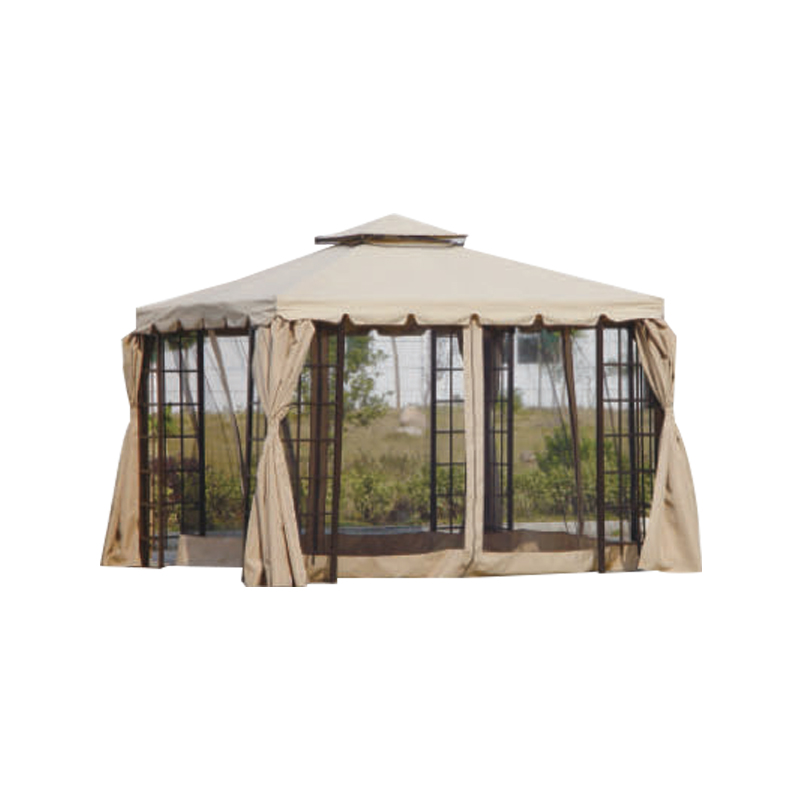
A Grand Patio Gazebo or Outdoor Privacy Gazebo can transform any backyard into a private retreat, but many landscaping and DIY community users ask what ground fixing methods keep gazebos stable in varying outdoor conditions? Stability isn’t just about the beauty of design — it’s about making sure the structure doesn’t shift, tip, or lift during wind or rainstorms. This concern appears repeatedly in forum threads and home improvement discussions, especially as homeowners evaluate long-term outdoor installations.
Gazebos are not naturally fixed to the earth or patio surface like a permanent building, so ensuring they are properly secured to different surfaces is key to safety and longevity. Some types of gazebos are designed for seasonal use and might only need simple fixation, while others become semi-permanent additions to outdoor living spaces, requiring robust anchoring strategies.
Anchoring Essentials: Why Fixation Matters
Even a well-built structure can be vulnerable to wind uplift and lateral forces if not fixed securely. Many homeowners who install gazebo kits or semi-permanent patio shelters report that the easiest mistake is neglecting secure anchoring, assuming the weight of the structure will keep it in place. However, winds exert significant upward force on canopies and roofs — sometimes enough to lift an unsecured gazebo.
Here’s a detailed look at common grounding methods that help keep gazebos stable on different surfaces:
1. Anchoring to Concrete or Solid Patio Surfaces
One of the more secure ways to fix a gazebo on a hard surface like concrete is to use concrete screws, wedge anchors, or embed bolts directly into the slab. This method physically ties the gazebo legs to the surface and prevents uplift from wind. Many installation guides emphasize that anchoring into solid ground — rather than just placing a gazebo on top of it — significantly increases stability and safety.
Drill holes into the concrete at marked locations.
Use expansion or wedge anchors rated for outdoor load.
Tighten bolts through the gazebo frame into the anchors.
This approach is especially relevant for homeowners with a finished patio who want a Grand Patio Gazebo to be a long-lasting feature of their outdoor space.
2. Ground Anchors for Soil or Grass
On soft surfaces like soil or grass, options such as ground auger anchors or corkscrew stakes provide effective fixation. These anchors screw into the earth and offer resistance to uplift by gripping the soil. They are often easier to install than concrete anchors and can be removed if the gazebo needs to be relocated.
Homeowners often use ropes, straps, or hardware to attach the gazebo frame directly to these ground anchors, ensuring a firm hold even under gusty conditions.
3. Using Weight Anchors
Where drilling or digging is not desirable — such as on existing patios or delicate yard features — weight anchors can offer a practical solution. Sandbags, water-filled weights, or decorative planters positioned at the base of each gazebo leg add downward force that counteracts wind uplift. While not as secure as fixed anchors, weight solutions are popular for temporary gazebo setups or seasonal installations.
This setup is often discussed in patio communities as a balance between convenience and additional stability.
4. Anchoring on Wooden Decks
Wooden decks require a slightly different anchoring strategy. Basic ground stakes won’t work here, so homeowners often use metal angle brackets and lag bolts to secure gazebo legs directly to deck joists. These attachments help distribute lateral loads and prevent frame movement. Pre-drilling pilot holes is recommended to avoid splitting wood.
Users on forums and community boards often stress the importance of anchoring into the deck’s structural framing — not just surface boards — to ensure the more effective stability.
5. Combined Solutions for Storm-Prone Areas
Where storms and high winds are common, many outdoor enthusiasts combine multiple anchoring methods. For example, a gazebo fixed with concrete anchors may also be reinforced with ground anchors or heavy weights to provide additional resilience. This layered approach offers peace of mind for larger Outdoor Privacy Gazebo installations.
Tips From Real-World Users
Community posts highlight some practical lessons from homeowners’ experiences:
At Linhai Jingda Arts & Crafts Co., Ltd., we regularly hear questions about gazebo durability and installation. Providing customers with a range of anchoring options — from surface anchors to ground fixation — ensures your Grand Patio Gazebo or Outdoor Privacy Gazebo remains a safe, stable feature of your home landscape.
Your email address will not be published. Required fields are marked *
Copright © Linhai Jingda Arts & Crafts Co., Ltd. All Rights Reserved.

Custom Outdoor Leisure Patio Furniture Products